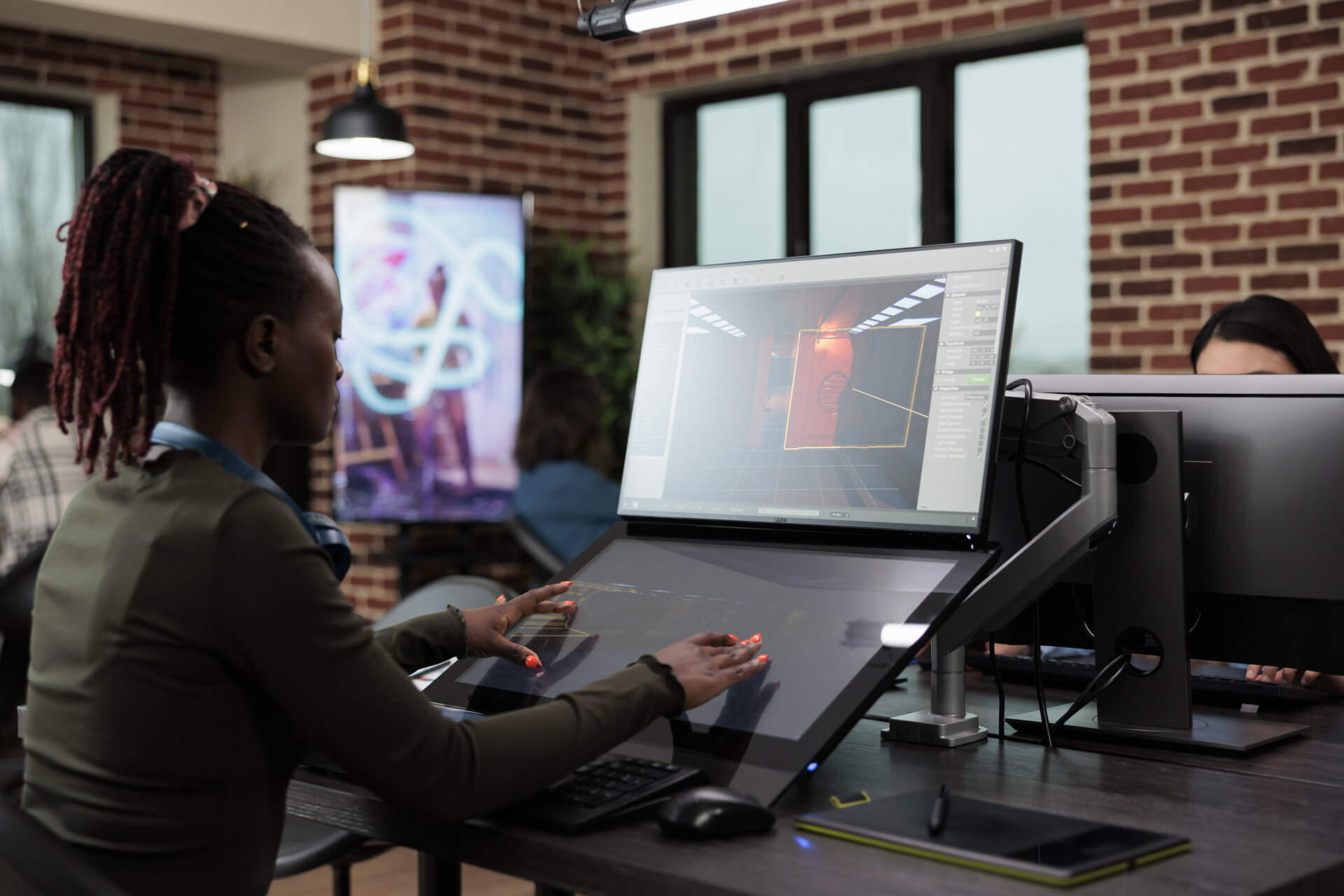
Did the idea of video game designer education cross your mind? Maybe a friend mentioned it recently. Perhaps you’ve always wanted to be part of the creative process for video games.
The worldwide games market is expected to reach over $500 billion in revenue. User penetration is also projected to jump to 36.4% by 2030. The gaming space is even more embracing of immersive technologies to deliver innovative experiences. This positive outlook makes the video game industry appealing to many. For that, more and more creatives are eyeing video game designer education.
If you want to know what education is required to be a game designer, then stick around! This guide provides a thorough look at video game design education, the required skills, and the pathways to launch a vibrant career. And beyond that, it will break down how that knowledge actually translates into real game development work. Not just what to learn.
Key Takeaways
- Video game designer education includes formal degrees, online learning, and hands-on project work.
- Strong designers combine creative thinking with technical understanding to make better gameplay decisions.
- Online programs and courses offer flexibility for students with full-time jobs or other obligations.
- Certifications and interactive media programs can elevate a strong portfolio that matters more than credentials alone.
- Tools like game engines and scripting directly influence how ideas become playable systems.
- Real-world experience through projects or collaboration is what makes candidates job-ready.
Understanding Video Game Designer Education

The goal of a video game designer education isn’t just to earn a degree. The bigger objective is learning how different parts of a game come together to create a playable experience.
It’s not just knowing the elements of game design. It’s about fully understanding that:
- Mechanics should influence player decisions. The player’s approach to challenges should be shaped by creating rules, choices, and consequences. It also applies to how they interact with the game world.
- Level design needs to define pacing through environmental cues, layout, and progression. This controls exploration, difficulty, and moments of tension.
- Systems must interact to create challenge and reward. Combat. Feedback loops. Progression economy. Components like these should be connected into a balanced player experience.
A designer should understand player progression systems. This influences how quickly players unlock abilities and feel rewarded for continued play. In games like Hades, repeated runs gradually reveal new dialogue, character relationships, and upgrades. It makes failure part of the progression experience. Not a setback. These design decisions determine pacing and subconsciously keep players engaged over time by reducing confusion and downtime.
This demonstrates that video game designer education isn’t just theoretical. It should connect design principles to how games work in practice.
Key Game Design Requirements
Before diving into the specifics of education for a video game designer, it’s worth detailing what game designers actually do.
A video game designer is responsible for the majority of a game’s cohesion and overall vision. The job involves defining how a game plays. Not just how it looks. This includes rules, systems, and player interaction. The role also typically involves working with programmers, artists, animators, and sound designers. It makes sure that all game elements fit together seamlessly.
In both indie and AAA studios, this means:
- Creating mechanics that are easy to understand but hard to master. Systems should have accessible rules. But they should also give room for player skill and strategy.
- Matching gameplay with the game’s core experience. Level design, pacing, and player objectives need to always support the genre and tone.
- Working within technical constraints set by programmers and tools. Adapting design ideas to engine capabilities and performance limitations ensures meeting production requirements.
Take first-person hero shooters like Overwatch 2. Designers often balance weapon behavior, reload time, and movement speed. This rewards players who perform well without being overpowered. It maintains fair and engaging combat. Small adjustments like these influence player positioning and overall strategy. As such, game design is less about ideas. It’s more about decision-making under constraints.
Some designers work on projects from scratch. Others use pre-existing assets. It really depends on a designer’s specialization. A narrative designer. A systems designer. A technical designer. Or a generalist designer. Even so, it’s vital to understand the interplay among story, mechanics, and player experience. These are at the heart of game design requirements.
Steps for Video Game Design Education
With 3.32 billion active gamers in 2026, there has never been a better time to start a game designer career path. There are ways for aspirants to get started, no matter where they are in their game-designing education pathway.
Training and skill courses for video game development can be taken before they receive any formal game designer qualifications. A great way to get a feel for the requirements of a professional video game designer is to play around with design software themselves. Forums, too, give access to a real treasure trove of free information.
While there are no definite steps to approach a video game designer education, here are practical insights to consider:
- Learn core design concepts – Focus on mechanics, feedback systems, and player behavior. Not just terminology.
- Choose a learning path – Formal education helps, but only if it includes real projects. Many designers combine degree programs, online courses, and self-driven learning.
- Build small but playable projects – Even simple prototypes teach more than theory. Creating a basic combat system or level layout reveals how players actually interact with a design.
- Develop a strong portfolio – Studios evaluate what designers have built. Not just what they’ve studied. A well-crafted portfolio shows decision-making, iteration, and understanding of player experience.
- Gain collaborative experience – Game development is team-based. Working with others teaches how design decisions affect programming, art, and production timelines.
- Keep iterating – Design skills improve through testing and refinement. The first version of a system is rarely the best one.
A practical path into game design focuses on building usable skills. Not just completing courses.
Common Game Design Education Questions
- Do You Need a College Degree to Be a Game Designer?
It’s possible to enter the video game development world without taking any specific game designer education programs. However, since many colleges now offer actual video game design education and game development degrees, this option is becoming less prevalent. Plus, most studios now prefer individuals with relevant game design education or who at least meet the requirements for video game designer certification.
Degrees in fields like computer science and computer programming are not bad options for those looking to become a video game designer.
- How long does it take to get a famous design education?
Most decisions will come down to personal preferences and unique criteria, since there is no universal timeline. Nevertheless, the related education typically falls into three categories with varying lengths and types:
- Associate Degree (Two years) – Two-year programs fulfill most of the requirements for video game designer education. They ensure students receive adequate exposure to the fundamentals that will drive their careers. Students will experience industry software, creative concepts, coding, scripting, design theory, and illustration.
- Bachelor’s Degree (Four years) – Pursuing a bachelor’s degree typically means an additional 2 years of study, offering 2 more years of exposure to game design language courses. It also gives learners additional time to explore traditional art courses and gain experience to meet the more specialized requirements of video game designers.
- Master’s Degree – A master’s program typically takes an additional one to two years after completing a bachelor’s degree. The curriculum includes business and management courses, such as game marketing, design mechanics, production techniques, management principles, and human resource management. A Master’s degree for a game designer can make them a valuable hire for a video game production company.
To dive deeper into the significance of a degree, visit our guide on whether a game design degree is worth it.
Essential Skills for Game Designers
More than credentials, game designers are judged by how effectively they can turn ideas into systems. Work that holds up under real player behavior. Having a balanced mix of soft and technical skills makes this easier to achieve and to prove.
Technical Skills
Game design requires enough technical awareness. It ensures the ability to work inside the same systems on which the game is built.
- Proficiency in game engines like Unity or Unreal Engine. Designers should be able to access frameworks to make functional games. It helps build environments and apply mechanics.
- Programming knowledge to prototyping mechanics. While not required, it’s an advantage that designers can code using basic scripting or built-in tools. This cuts the chances of miscommunication. It also makes sure that every proposed concept is feasible.
This means a designer can adjust variables. Like cooldown timing or damage values. Having technical skills helps in observing player behavior changes immediately. Without these, designers become dependent on programmers for every iteration. That slows down feedback loops.
Soft Skills
Game design is teamwork. So ideas only matter if they survive communication across teams.
- Communication and collaboration to clearly convey design intent. This is for programmers, artists, and QA teams to stay aligned with the project’s vision.
- Adaptability to respond to feedback from playtesting. Games are rarely final after the first development. A game designer should be able to adapt to changes without attachment to initial ideas.
- Understanding of player psychology and critical thinking to iterate systems. These help adjust the game based on how players actually behave. Not how they are expected to respond.
A mechanic often changes many times after testing. It’s because real players rarely interact with systems the way designers predict. Designers who can’t adapt to this feedback loop typically produce systems that work in theory but fail in practice.
Training and Skill Development Courses Outside of College
If formal education is out of the question, aspirants can turn to online platforms such as Udemy, Lynda.com, and the Game Institute. They also offer game development courses that supplement traditional education, proving that not all learning happens in formal programs. Usually, these courses focus on:
- Level design and game mechanics
- 3D modeling and animation
- Programming for interactive media
- Game testing and debugging
The benefit of using a service dedicated to the gaming industry is that learners can access forums full of other like-minded individuals. Puzzling out their problems with other aspiring game developers will serve them well. It will allow them to continue collaborating in a professional setting. These can help gain practical experience and boost the chances of landing a job.
Choosing the Right Game Design Program

Many game design schools offer a variety of programs. This can confuse students when choosing the best one. But a useful rule of thumb is picking the program that focuses on implementation. Not just instruction
In doing so, students should make it a point to look for:
- Project-based learning – A program should combine theory and practical learning. Hands-on experience, such as completing a playable game, introduces learners to actual development pipelines. It also helps build a portfolio that can be used in a competitive job market.
- Technical integration – The program needs to train learners in industry-standard tools and software. It should push students to master game engines such as Unity, Godot, or Unreal, as well as software such as Autodesk Maya and Figma.
- Industry-relevant skills – A program must ensure that aspirants establish a well-rounded skill set. It should be comprehensive enough to cover areas like playtesting and systems thinking.
Keep in mind that the true value of a program is measured by what graduates can do after completing it. The certificate one gets is just the cherry on top of the actual achievement.
Career Paths After Game Design Education
Game design roles vary based on specialization and experience. And progress often means climbing the industry ladder through the years and practice.
- Entry-Level – Typical beginner roles include a junior game designer and quality assurance tester. This entails assisting with level or system design, testing, and evaluating gameplay systems.
- Mid-Level – One can become a game designer, level designer, or systems designer after getting experience. These roles mean they own specific gameplay features, design mechanics, and balance systems.
- Senior-Level – Proven advanced expertise in the field opens doors to positions like a lead game designer or a creative director. The responsibilities then expand to defining the overall game direction and coordinating across teams. This keeps the project on point.
Each level requires a deeper understanding of how systems interact. Not just more knowledge.
Frequently Asked Questions
Q: What education do I need to be a video game designer?
A: A video game designer typically needs a foundation in creative and technical skills. Many pursue degrees in game design, computer science, or related fields, while others supplement their learning with online courses, certifications, or practical experience.
Q: What is the most common level of education video game designers earn?
A: The most common educational background for video game designers is a bachelor’s degree in game design, computer science, or interactive media.
Q: Which course is best for game design?
A: The best course depends on the goals. Degree programs provide comprehensive training, while online courses and skill-specific programs offer flexibility and focused learning in areas like game programming, level design, or 3D animation.
Q: Is video game design a hard major?
Video game design can be challenging because it combines creativity with technical skills.
Q: Is game design a lot of math?
A: Math is part of game design, especially in programming, physics simulations, and gameplay mechanics.
Q: Is game design a good career?
A: Game design can be rewarding for those passionate about creating interactive experiences. It offers opportunities to work on creative projects, collaborate with diverse teams, and contribute to a thriving industry.
Q: What salary does a game designer make?
A: Salaries vary depending on experience, location, and the size of the company. Designers in larger studios or specialized roles generally earn higher pay, while entry-level positions provide a foundation for growth as skills and experience increase.
Wrapping Up: Start Your Game Design Education Today
Taking on a video game designer education isn’t focused on collecting credentials. It’s maximizing a structured level of learning and training. The ultimate purpose of this is to understand how to design systems that work.
Education helps. But for indie studios like Extremely OK Games or big AAA developers like Activision Blizzard? Making intentional design decisions. Turning ideas into playable experiences. Understanding player behavior. All of these abilities matter more.
Focus on building, testing, and improving. That’s what turns knowledge into a real career in game design. Once you make up your mind, we suggest you begin exploring your options today with the help of our guide on the top game design courses.

