When deciding to enter the games industry, it is vital to choose a career path that matches your skills, abilities, and interests. While ‘game designer’ might seem like a catch-all term, it is actually a career path as specific as being an animator. But what is the difference between game animation vs game design? At the same time, how do you decide which path to take between animation and game design?
This article breaks down the core difference between the two roles in game development. It also provides insights about possible careers, popular tools, useful tips, and much more.
If you want to know which is right for you, keep reading to find out!
Game Animation vs. Game Design

Let’s start with the question: What is video game animation? Particularly, game animation is the process of taking characters, environments, and visual effects, and the idea of how they should move, and applying techniques to make them move in the desired way to bring video games to life.
Meanwhile, game design involves making compelling challenges, characters, goals, levels, stories, and rules that allow interactions to be possible within the game.
Another effective way to understand game animation and design is by learning the responsibilities of the people behind it. Below is a detailed explanation of the two distinct jobs in the gaming industry.
What is a Game Designer?
In essence, a game designer is the one who takes care of designing the overall experience a game delivers to players. Specifically, the responsibility covers the storyline, gameplay mechanics, level progression, and user interaction. Part of the job also requires them to ensure that all of these works cohesively and engagingly. That means they work on various aspects, from conceptualization to implementation. Sometimes they even have to take part in testing and feedback analysis.
If a team of designers is required to work on a project, then the role will have specialized types, such as a narrative designer or a mechanics designer. On the other hand, one lead designer is often enough in smaller projects. The one who takes on multiple roles in smaller teams or indie studios is known as a generalist designer. Nonetheless, all types of designers have the same end objective — creating a coherent play experience, from the overarching storyline to how responsive the buttons should be.
What is a Game Animator?
Much like game designers design, game animators give life to characters, objects, and environments. Animators play an important role in the game’s pipeline. They ensure that the game world behaves in a way that feels natural to players. More concretely, an animator in gaming transforms the vision of the game designer into motion, creating visual cues and interactive experiences. In other words, they ensure that movements look realistic and suit the concept of the game. Animators make characters walk and talk, make sure the hands on a clock move correctly, and the like.
Importance of Collaboration Between Animators and Game Designers
While these careers are parallel, they are not the same. Both roles are necessary for a successful game. To make this happen, close cooperation between animators and designers is required. The process involves designers providing the vision, outlining the role of the characters and how the game world responds, while animators will make sure these actions look natural and engaging. This interplay is often referred to as animation and game design or game design and animation, highlighting the relationship between the two disciplines.
Tools Used in Game Animation and Design
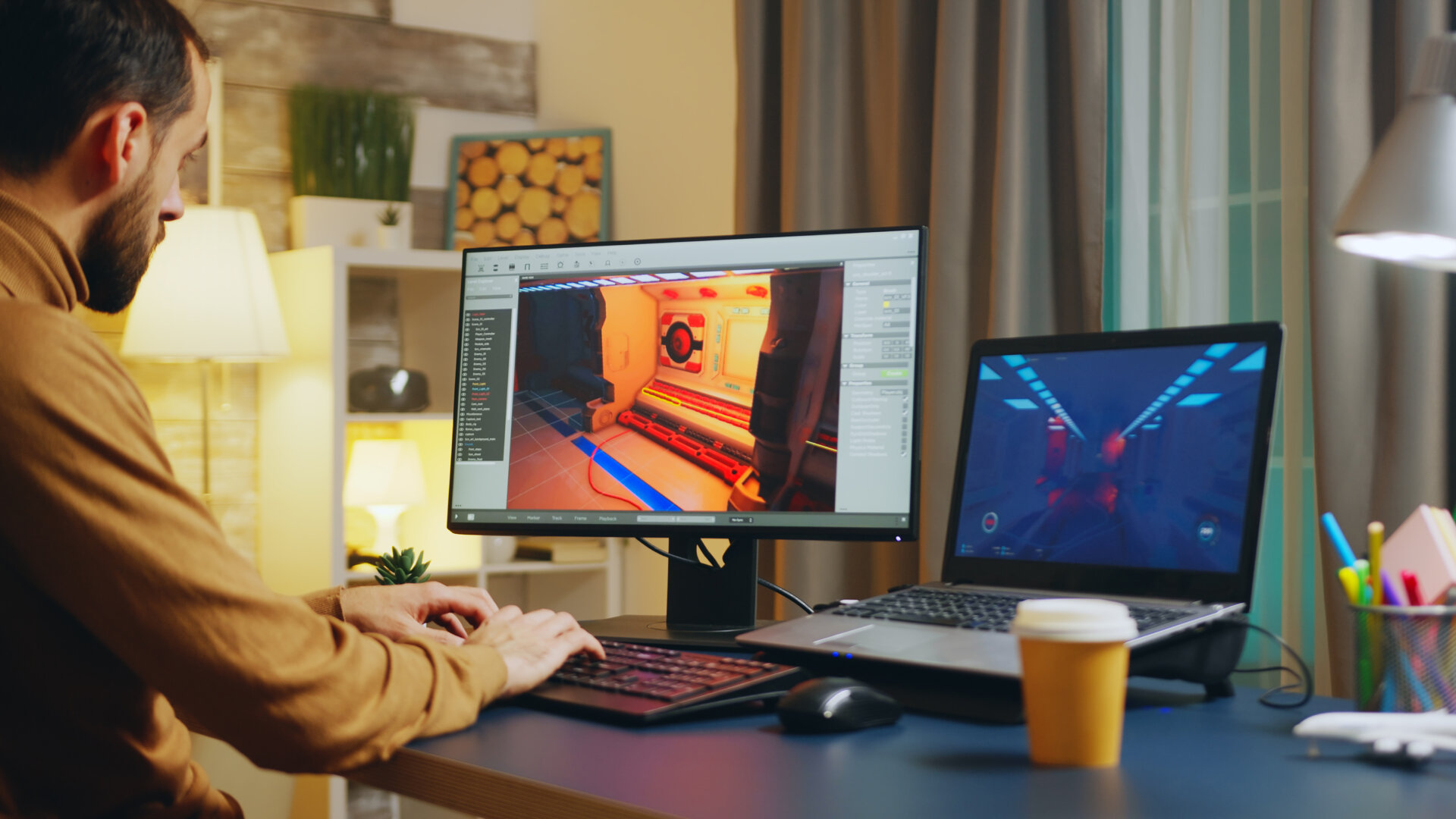
Both designers and animators rely on specialized software to do their jobs. That is for sure! Oftentimes, designers work with engines, such as Godot, Unity, and Unreal Engine, to implement gameplay mechanics and more. Meanwhile, animators commonly use tools, including 3ds Max, Blender, Maya, and the like.
Educational Requirements
A game designer’s education would most likely be built on an understanding of game mechanics and how players interact with the game. It often takes the form of a college education and includes classes in design methodologies and principles of computer science.
In contrast, animation is a very technical skill, and anyone trying to get into animation should have a matching technical background (most often achieved through college education). Additionally, they are required to have a deep technical understanding of computer science at play, a strong mathematical background, and programming expertise.
Career Paths in Video Game Design and Animation

The career trajectory for both careers is very similar; one would usually begin with a junior role, working as part of a team (of variable size depending on the studio). Over time and with substantial experience, professionals can progress to senior roles. You may even become experienced enough to become a project lead, taking control of the entire project and overseeing all the processes.
Salaries in Game Animation and Game Design
The annual video game animation salary in the US is around $83,000. Game animators in junior positions make around $63,00 while senior roles reach roughly $116,000 a year.
Game designers, on the other hand, make around $88,000 per year. Entry-level positions start at $66,000, and senior roles can earn up to $123,000 a year.
Tips for Choosing the Right Career Path

Whether you want to become a game designer or a game animator depends on a lot more than the relative starting salaries. Bear in mind the skill level required for each job, too. A designer needs a broad but shallow understanding of all elements of the design process. Meanwhile, an animator needs narrow but deep technical knowledge about animation.
For that reason, deciding between the two involves considering your interests, strengths, and career goals. To make a more informed choice, consider the following:
- Determine if you are interested in mechanics or in motion.
- Identify and hone your skill set.
- Build a portfolio and gain experience by practicing.
- Seek help from professionals through mentorship and networking.
Final Words
Always remember that successful games require collaboration, technical skills, and creativity. And although it can be rewarding, choosing to be part of the games industry is a big decision and one that many people enter into lightly. Make sure to consider your career options before you start, and think about your interests and what you’re likely to be better at doing before choosing which career path you want to follow. Regardless of which role you decide to take on, one thing is for sure: animation and game design define the heart of modern video games.

